
Building a device that performs reliably, scales cleanly and survives the realities of contract manufacturing services begins with engineering choices that are informed, evidence based and resilient. At Quvara, our highly skilled engineering teams guide every decision that shapes material behaviour, process robustness and cost structure — ensuring our customers progress with clarity, confidence and measurable control.
Medical Device Engineering Company
Our capabilities
When moulding processes must scale with precision, we engineer robust, validated moulding process development
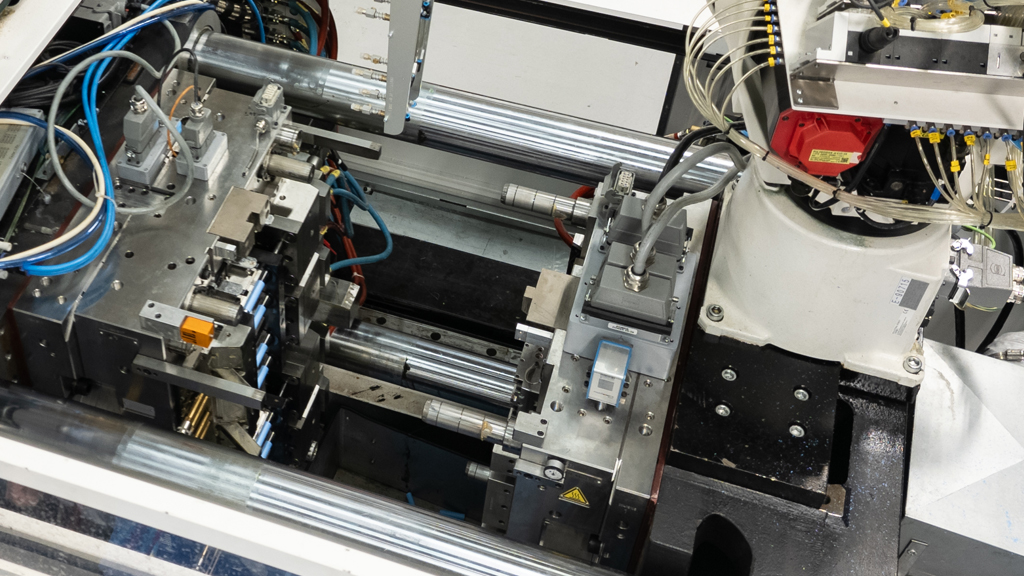
Optimise and Validate the Process Window
Scaling moulded medical components demands a process that is stable, predictable and deeply understood. We apply skilled, data-driven, evidence-based methods such as Scientific Mouldings and Design of Experiments (DOE) to build confidence.
- FOT dry cycling, process benchmarking, 8 hour dimensional window and cosmetic performance runs
- Screening DOE (e.g. Taguchi) to pinpoint key influence variables
- Integration of cavity pressure sensing, mould-vision and real-time performance monitoring
- Full factorial optimisation to establish a robust, noise-resistant process window
- Controlled steel resizing where necessary
- Verification runs and capability checks (Cp/Cpk) to confirm stability
The result: a moulding process that enters production capable, repeatable and compliant, with long-term stability engineering from the start.
When material selection becomes unclear, we guide decisions that protect processability, cost and compliance

Supporting Clients with Material Selection
Selecting materials for medical devices involves balancing biocompatibility, sterilisation, mechanical performance, manufacturability and supply chain security.
Quvara supports clients early with deep materials engineering expertise.
- Assessment of dimensional stability, tolerance capability and environmental behaviour
- Evaluation of processing performance for moulding and assembly
- Clear visibility of supply reliability and cost
- Consideration of blends, colourants, stabilisers or additives
- Alignment with sustainability requirements
Our extensive experience in materials research, processing and problem investigation gives customers confidence in decisions that affect long-term quality and manufacturability.
When springs are critical to device performance, our in house spring design & manufacturing eliminates risk
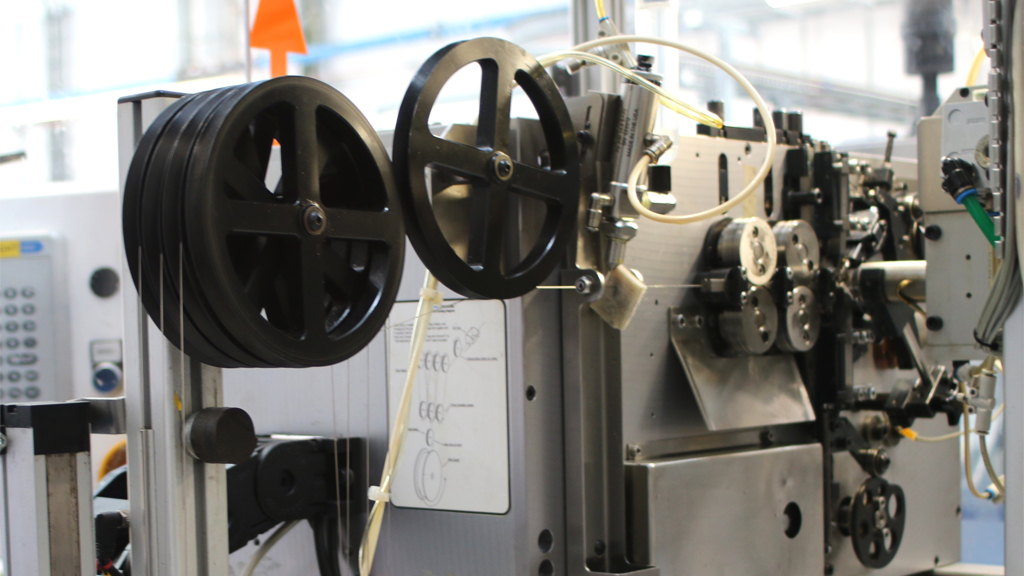
In-House Spring Design & Manufacturing Expertise
Springs are fundamental to many drug delivery devices, yet are often a hidden source of variability or supply chain fragility.
Quvara vertically integrates the entire process: wire sourcing, coiling, in process checking, automated testing, buffer storage and closed loop feedback. Multiple coiling lines provide redundancy and capacity flexibility.
- Custom engineered spring solutions aligned to product function
- In-house management of manufacturing and quality risks
- Lower cost and shorter lead times
- Stable, high quality supply matched to assembly line demand
Quvara’s many years experience working with clients’ design teams, give our clients flexibility of spring design coupled with repeatable and reliable supply, all under one roof. For bespoke and integrated spring design and assured manufacture, Quvara is your ideal partner.
When continuous improvement is essential, our QValue system delivers measurable performance gains
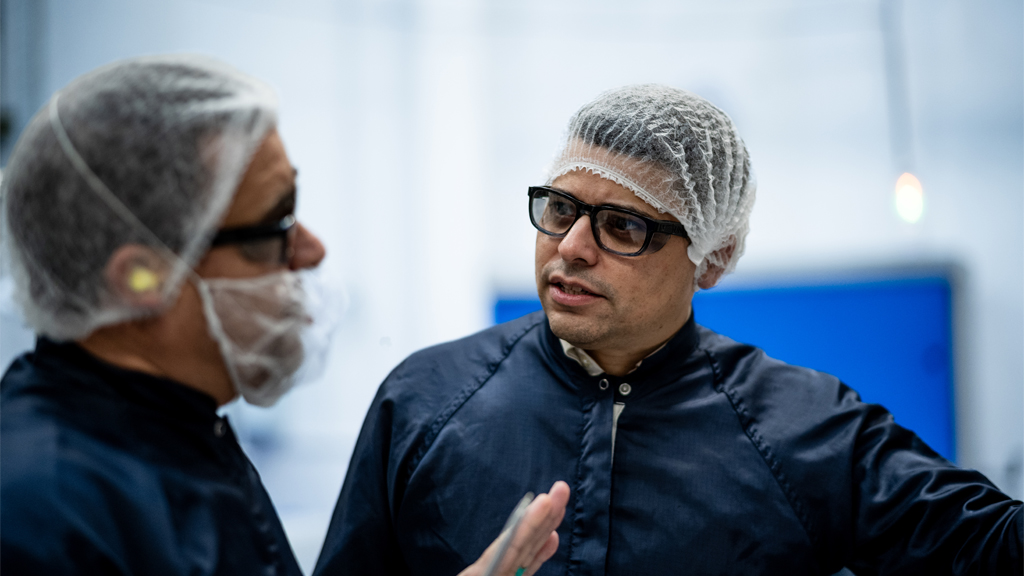
Quvara's "QValue" Continuous Improvement Process
In high volume medical manufacturing, even small inefficiencies multiply into significant cost or quality impacts.
Quvara’s QValue programme drives Lean, Six Sigma, SPC and Kaizen initiatives across production lines, building a culture that continually removes waste, reduces variability and increases throughput.
- Value engineering integrated with continuous improvement
- Kaizen workshops prior to any significant investment
- Cost reduction sharing projects with customers maximising benefits for all parties
- Systematic approach to reduce defect rates, enhance throughput, optimise processes and non-value add resource.
Projects are well funded, overseen by senior leadership and deliver year on year improvements, often shared with our clients.
When cost drivers are unclear, our COGS modelling gives full visibility and avoids surprises

Continuous Cost Optimisation
Unit cost, tooling strategy and long-term investment decisions must be understood early to avoid misalignment and late financial shocks.
Quvara’s Cost Of Goods Sold (COGS) modelling process defines a complete manufacturing strategy, highlights all assumptions, exposes key cost drivers and generates a roadmap for continuous value engineering.
- Early capture of every cost reduction opportunity
- Prevention of late stage cost escalation
- True visibility of total project cost
- Clear reporting to project steering committees
We monitor all costs throughout development, enabling informed decisions backed by real data.
Why choose Quvara engineering?
Because Quvara doesn’t simply support clients’ engineers — we bring a wealth of expertise to ensure the best outcome.
We bring deep materials insight, rigorous process development and transparent cost-of-goods modelling into one integrated engineering approach, partnering closely with customers to ensure every choice is optimised for performance, manufacturability and long-term reliability.
The result: better decisions earlier, predictable scaleup, reduced total cost and components that behave consistently across every batch.
- Expert materials engineering to de-risk selection, processing, and long-term stability
- Full visibility of cost drivers through structured COGS modelling
- Evidence based moulding process development from FOT through validation
- Data driven optimisation using DOE, statistical analysis and capability checks
- Continuous improvement programmes delivering real, measurable gains
- In-house spring design and manufacture to eliminate supply and performance risk
Need more information on our Engineering Processes?
If you are developing, scaling, or manufacturing a regulated medical device, unanswered questions slow everything down.