Validate Two Tools in a Very Compressed Timeframe? – No Problem.

The Context

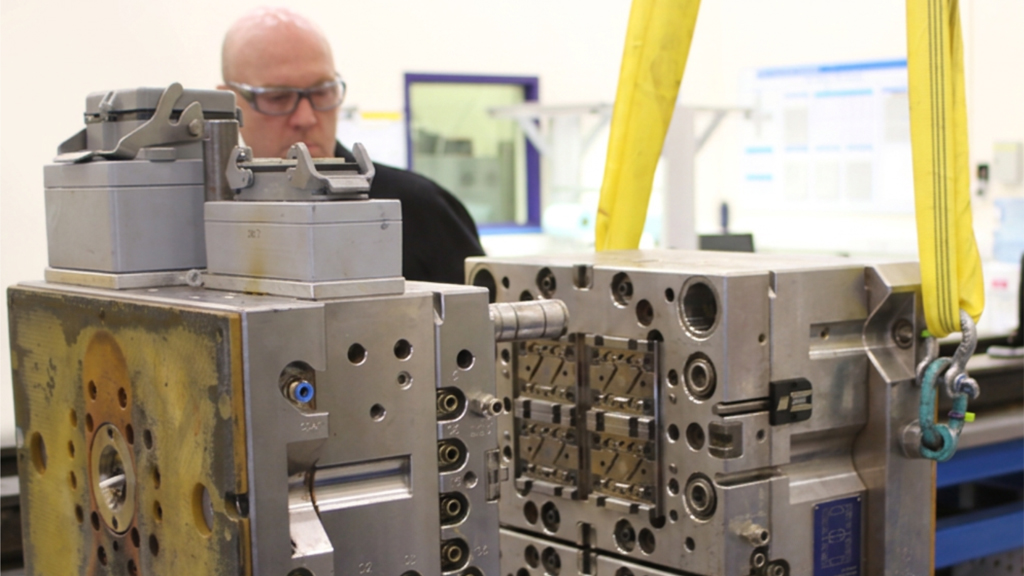
A global medical device customer faced an urgent supply risk driven by a sudden increase in demand for critical components. Two existing single-impression mould tools were available, but neither had been formally validated for production use.

To avoid a potential supply gap, a solution was required that could bring these tools to full production readiness in an extremely compressed timeframe—without compromising regulatory compliance or product quality.

The Challenge

Although the mould tools physically existed, they had not progressed through any formal validation stages.
This meant several critical steps were outstanding:

  • Tool verification and dimensional approval
  • Process optimisation and characterisation
  • Operational Qualification (OQ) and Performance Qualification (PQ)
  • Capability and stability studies

Under normal circumstances, completing these activities would require a structured, multi-phase validation programme. However, the urgency of customer demand meant that a traditional sequential approach would not deliver parts quickly enough.

In addition, permanent production capacity was not yet available, meaning validated parts needed to be manufactured using interim resources.

Our Solution

The approach taken was to implement a rapid, parallelised validation model that compressed timelines while maintaining full technical rigor.

An initial technical readiness assessment was completed to evaluate the condition of the mould tools, including:

  • Inspection of cavities, cores, and mechanical condition
  • Dimensional comparison to original CAD
  • Verification of machine compatibility

Following this, validation activities were executed using a parallel-path strategy, enabling overlapping workstreams rather than sequential phases:

  • Parallel metrology and process tuning: Dimensional measurement and process adjustments were carried out simultaneously, enabling immediate feedback-driven optimisation
  • Accelerated process characterisation: Parameter mapping, window definition, and OQ activities were overlapped using mini-DOE studies
  • Concurrent documentation: Validation protocols, risk assessments, and reporting were developed in parallel with execution to eliminate administrative delays

To address immediate supply needs, an interim production strategy was deployed using pilot-suite equipment. This included:

  • Optimising cycle times to approach production-level output
  • Increasing in-process inspection frequency
  • Implementing temporary fixtures and handling solutions
  • Using real-time metrology feedback to ensure quality stability

This combined approach ensured that validated components could be supplied without waiting for full-scale production assets.

Capabilities Used

Quvara leveraged its integrated engineering, quality, and operations expertise to deliver the programme at speed:

  • Highly experienced, cross-functional engineering and validation teams
  • Advanced metrology capability with parallel measurement streams
  • Agile project management with daily stand-ups and rapid decision cycles
  • Strong supplier collaboration for fast tool modifications and support
  • Robust risk-based validation frameworks ensuring compliance throughout

The team operated with a high-frequency communication model, enabling real-time issue resolution and continuous alignment between all stakeholders.

Results and Outcomes

Quvara’s structured yet agile execution ensured successful delivery against aggressive timelines:

  • A typical validation time of over 6 months was reduced to 8 weeks
  • Both mould tools validated to full production standard in a compressed timeframe
  • Complete dimensional verification and capability (Cp/Cpk) achieved despite no prior validation history
  • Interim production successfully implemented, preventing any supply interruption
  • Stable, high-quality parts delivered from development-stage tooling
  • A repeatable rapid-validation methodology established for future use

The project demonstrated that with the right engineering strategy and execution model, existing assets can be rapidly transformed into production-ready solutions, eliminating the need for new tooling and significantly reducing time to market.

Do you have a problem that needs solving?

Got a question?

Hopefully the below FAQ’s will answer any questions you have, if not, head over and Ask a question, any question on our contact page.

Our engineering and validation teams can implement rapid, low-risk solutions that increase capacity within tight timelines.

We design solutions that increase effective capacity using existing infrastructure, minimising capital investment and avoiding long validation cycles.

All Quvara solutions are developed within a fully compliant framework, ensuring scalability without compromising quality or regulatory standards.

Our in-house engineering, quality, and manufacturing teams work together to design, validate, and deploy solutions at pace.

We focus on automated, integrated solutions that enhance output without increasing labour requirements.

We design staged, low-risk implementation plans that protect ongoing production while scaling capacity.

Quvara combines engineering insight, validated manufacturing, and scalable infrastructure to support your growth, now and long term.