The approach taken was to implement a rapid, parallelised validation model that compressed timelines while maintaining full technical rigor.
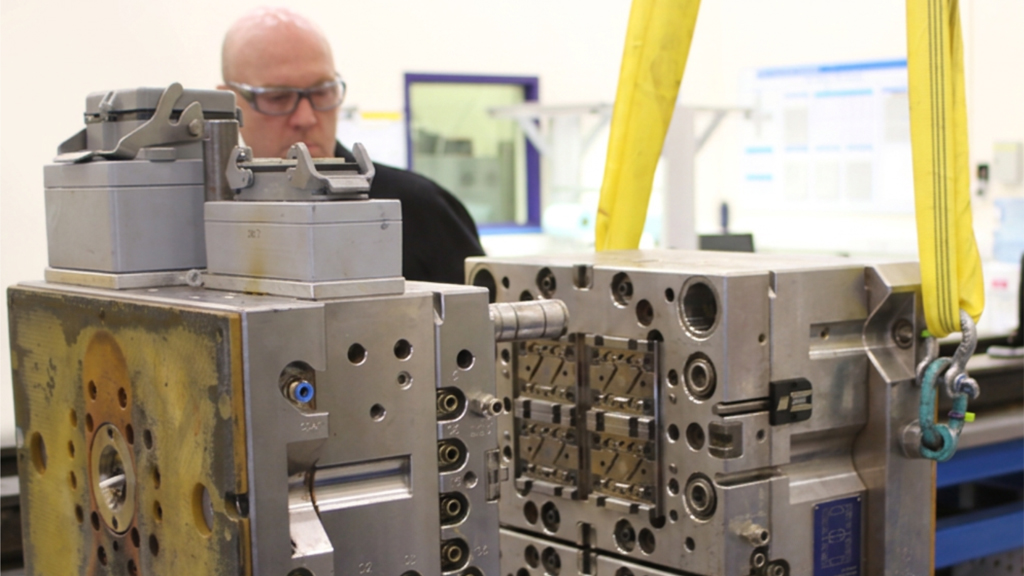
An initial technical readiness assessment was completed to evaluate the condition of the mould tools, including:
- Inspection of cavities, cores, and mechanical condition
- Dimensional comparison to original CAD
- Verification of machine compatibility
Following this, validation activities were executed using a parallel-path strategy, enabling overlapping workstreams rather than sequential phases:
- Parallel metrology and process tuning: Dimensional measurement and process adjustments were carried out simultaneously, enabling immediate feedback-driven optimisation
- Accelerated process characterisation: Parameter mapping, window definition, and OQ activities were overlapped using mini-DOE studies
- Concurrent documentation: Validation protocols, risk assessments, and reporting were developed in parallel with execution to eliminate administrative delays
To address immediate supply needs, an interim production strategy was deployed using pilot-suite equipment. This included:
- Optimising cycle times to approach production-level output
- Increasing in-process inspection frequency
- Implementing temporary fixtures and handling solutions
- Using real-time metrology feedback to ensure quality stability
This combined approach ensured that validated components could be supplied without waiting for full-scale production assets.